by yumintanlive | Jan 19, 2026 | Astrology, Evolutionary Astrology
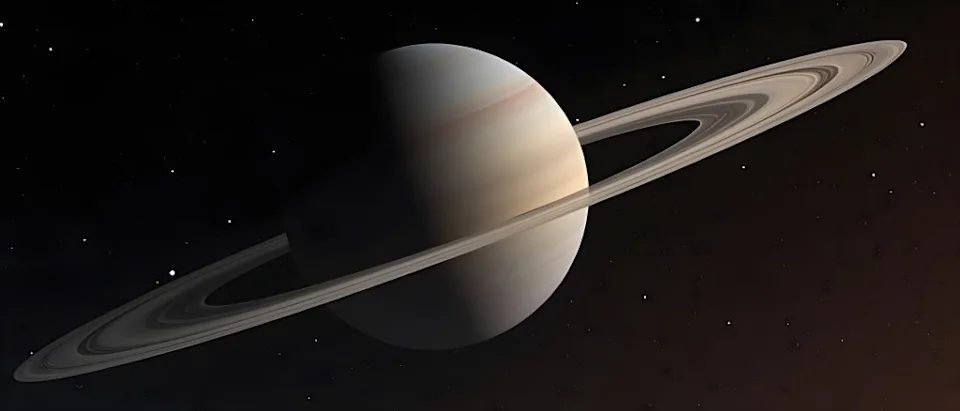
I want to talk about Saturn moving back into Aries in February 2026, because this is not a light or abstract transit. It is personal. It touches identity, will, courage, and the part of us that wants to say, this is who I am and this is what I’m here to do.
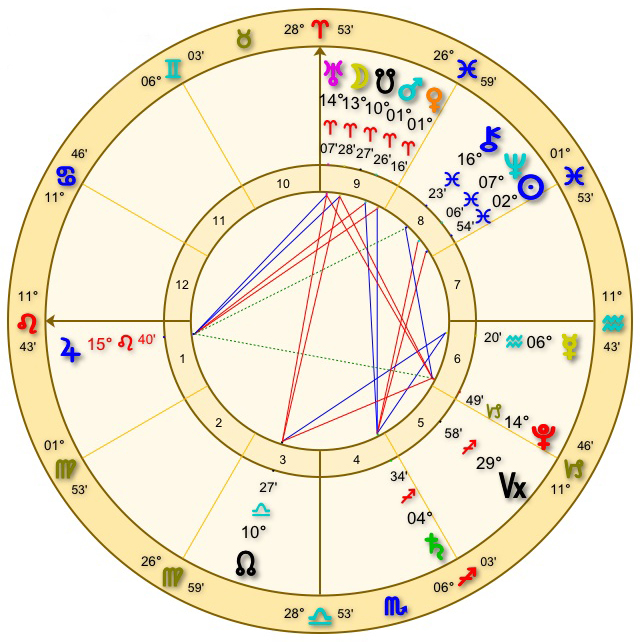
Saturn first entered Aries in late May 2025, then retrograded back into Pisces in September. That back-and-forth mattered. It asked us to stay with unfinished emotional and psychological material rather than rushing ahead. Saturn finally leaves Pisces and enters Aries for good on February 13, 2026, and it will remain in Aries until April 2028. This is when the Aries work truly begins.
Saturn in Aries often brings up a quiet tension between urgency and fear. On one side, there is a strong inner push to act, initiate, and lead. On the other, there is hesitation and an old internal voice that says you might get it wrong, or you are not ready yet.
This tension is not a flaw. It is the work.
The shift from Pisces to Aries is significant. Saturn in Pisces has been an inward-facing cycle. It has brought up grief, exhaustion, boundary confusion, emotional overwhelm, and survival patterns rooted in disappearance or over-accommodation. Many people have felt tired or unclear about direction, even while doing deep inner work.
When Saturn moves into Aries, the focus turns outward. The question becomes less about understanding your wounds and more about how you take responsibility for your will, your choices, and your direction in real life.Psychologically, Aries is about the development of a healthy sense of self. Saturn in Aries asks very direct questions.
Where did you learn it was unsafe to assert yourself?
Where did initiative get shut down?
Where did confidence turn into self-policing instead of self-trust?
For many people with early experiences of criticism, control, or emotional unpredictability, taking up space did not feel safe. Wanting something may have felt selfish. Anger may have felt unacceptable. Saturn does not erase these imprints. It brings them into conscious awareness so they can be worked with differently.
This is why Saturn in Aries can feel heavy at first. You may notice procrastination around things that matter. You may feel pressure making decisions, even small ones. Or you may swing between over-pushing and shutting down. These are nervous system responses, not personal failures.
The deeper invitation of this transit is maturity around agency.
Saturn is not asking you to be fearless. It is asking you to be responsible for your fear without letting it run your life. It is asking you to build a self that can act with steadiness, not impulsivity, and with integrity, not self-betrayal.
Growth during this transit does not come from dramatic leaps. It comes from consistent, embodied choices. Saying no when you mean no. Saying yes when you actually want to. Following through on what you start. Letting confidence be something you practice, not something you wait to feel.
If you look closely, Saturn in Aries is not about proving yourself. It is about becoming someone you can rely on.
And that is hopeful.
Because once inner authority is built, it stays. It becomes a foundation.
As this transit unfolds, notice where life is asking you to take yourself seriously. Not harshly, not critically, but with commitment.
That is Saturn’s real gift.
by yumintanlive | Sep 26, 2019 | Astrology, Psychology & Mental Health
Shame is the major reason that keeps a lot of “Sexual Assault Survivors” in silent. Often many survivors think that it is their faults to what have happened to them and they choose not to speak up because of the shame they carry.
Today, I would like to talk about how shame developed and three ways to develop shame resilience.
by yumintanlive | Aug 28, 2019 | Astrology, Evolutionary Astrology
I know that modern science will never be able to scientifically prove astrology for as long as I live. So rather than making a statement, I’m just going to discuss why modern science can’t validate astrology, but astrology still possesses huge research meaning and value.
Integrity vs Bias
The research of material science emphasizes on the collection and rational analysis of data. If we were to say that such a research method is suitable for all kinds of research targets, it would be a biased statement. Firstly, not everything can be quantified, such as creativity and love. Secondly, material science can’t satisfy the deeper needs of human. Although it can bring about convenience and comfort for our everyday lives, such as high speed rails, computers, telephones etc., it is unable to satisfy our spiritual and inner needs. Thirdly, the development of world civilization has widened the gap between us and the natural world. This phenomenon has caused human to deny the integrity of the universe. This can be reflected in the ecological crisis that we are facing right now, which has resulted from a lack of understanding of the overall ecosystem by human.
Since astrology is the study of how people should blend in with the universe and the law of nature, and to go with the flow in order to achieve better growth, the denial of integrity by modern people has led to them not believing in astrology. Does age-old wisdom really need to be proven by modern science in order to be valid? In other words, just because Western science can’t fully prove the theory of Chinese medicine, does that mean Chinese medicine is ineffective?
Nature vs. Nurture
John Bowlby’s attachment theory is currently one of the most popular theories in the field of child psychology and growth. The basis of the theory is that the connection and interaction between a child and his caregiver is an important factor in deciding the child’s behavioral development in the future.Between the age of zero and five, when children receive adequate love and care from their caregivers, they will have more courage to explore and discover more about this world. On the contrary, if they lack security, they would avoid this world instead. Such a pattern will continue until the children become adults. In modern psychological terms, this is called nurture, whereby the environment that a person grows up in will be a deciding factor in his growth.
However, there is also another kind of situation in reality. It has been observed that some children are born to be livelier and more active, whereas others are shier and more introverted; some are more stubborn while others are more flexible. This is the temperament theory as suggested by Carl Jung, which states that every child is born into this world with his own unique character.They will interact with this world in their own unique way, this is called the nature theory. Parents with more than two children will definitely understand what I’m talking about.
It is not possible to prove the nature theory with modern science, but it definitely exists. There is still no conclusion to the ongoing nature vs. nurture debate. From an astrological perspective, every person’s unique traits are reflected by their birth charts, but at the same time, astrology is the study of people’s life journey and cycles, so the challenges and opportunities that people might face in their later development can also be observed from the astrolabe.
Challenges Posed by Quantum Physics for Research Targets
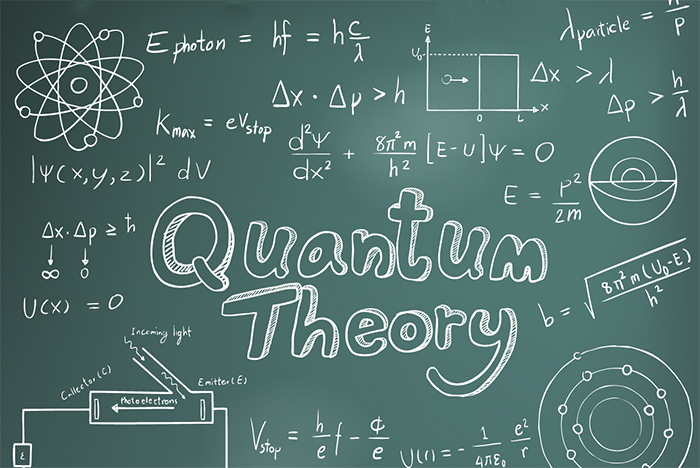
All scientific research requires research targets. In order for us to obtain accurate data, it is necessary for our research targets to remain constant so that we can accurately measure different hypotheses. However, along with the development of quantum physics, this has become impossible as our research has led to the minimization of units for all matter, such as atoms and electrons. Since they are extremely light in mass, these particles are constantly in motion. Even the tiniest and lightest measuring instrument is unable to measure them. Once the measuring instrument discovers them, they would escape.This proves that it is impossible for research targets to remain constant and not be affected by observers. In other words, it is proven that research conducted on research targets cannot be fully accurate. This has broken the theory of traditional physics, so the target of observation cannot exist in independence of the observer. The target of observation and the observer is a unified whole.This idea of a unified whole is also evident in different philosophies and religions. For example, Taoism promotes living in harmony with “the Way”, Buddhism emphasizes on the inexistence of oneself, Para Vidya as practiced in Hinduism etc. Although I’m not sure what the future trend of scientific development might be, it is certain that the current research methods won’t be able to fully prove and validate astrology.
In conclusion, the reason why astrology has gained such a negative reputation in the scientific and academic fields over the past decades is because the majority of astrologists have emphasized on foretelling and making predictions, rather than focusing on a person’s inner life. Using astrology as a tool for self-development and achievement should be the direction for modern astrology.